Thought Leadership Thursday
Empowering Arizona Families Through Financial Education and Long-Term Savings
Thought Leadership Thursday Article
Empowering Arizona Families Through Financial Education and Long-Term Savings
April 2, 2026
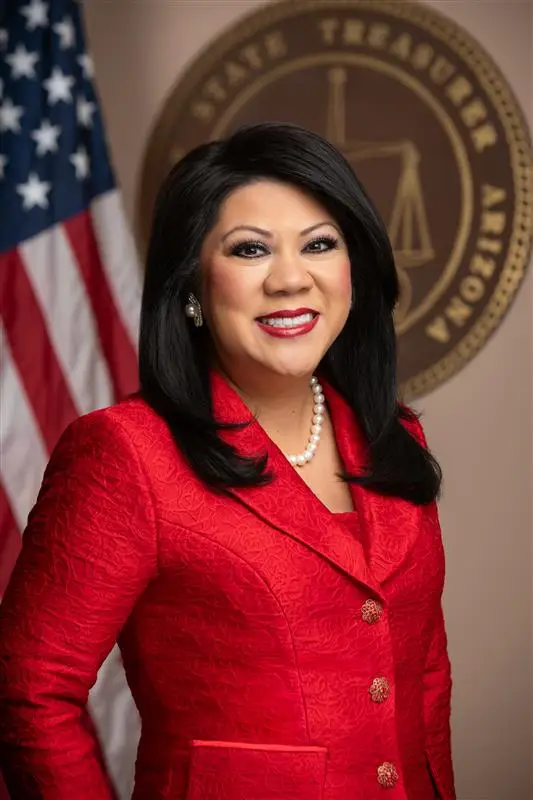
Kimberly Yee
Arizona Treasurer
As Financial Literacy Month gets underway, I am proud to reflect on how far we have come in Arizona in expanding and strengthening financial education. My commitment to advocating for financial literacy began long before I was elected Treasurer of Arizona. When I speak about my passion for empowering individuals with basic money‑management skills, I always share a story from 18 years ago.
In 2008, I was working as a staff member for former Arizona State Treasurer Dean Martin. I visited one of our state university campuses during student orientation week to discuss financial education as part of my role in the Treasurer’s Office. As I walked to the lecture hall, I passed table after table of credit card companies incentivizing students to sign up for a credit card with a free t‑shirt or other promotional items. Students were signing up for multiple cards all in one day.
As the students arrived at my seminar, I opened by asking them, "How many of you just signed up for your first credit card?" Almost every hand went up. My second question was, “How many of you have ever taken a class on financial literacy?” Unfortunately, the same number of hands were not raised, and I knew we had a problem.
Throughout my tenure in the Arizona Legislature prior to being elected Treasurer, I advanced legislation to add financial literacy into our state's academic content standards and created a special high school diploma for students taking coursework in financial education. In 2019, as Treasurer, I introduced several pieces of legislation to strengthen financial education, including a law that requires all Arizona students to receive financial education as part of their economics semester before graduating from high school. Personal money management must be taught to our young students to ensure they are equipped with this essential life skill before navigating the financial challenges of the real world.
In Arizona, the Department of Economic Security provided Temporary Assistance for Needy Families (TANF) welfare-related benefits to more than 11,000 individuals. I wanted to address financial stability for adults, especially vulnerable populations who continue to seek government subsidies for assistance. In 2020, I advanced a law that requires the menu of workforce training options given to individuals on TANF to include financial education so that recipients of government funding can understand how to manage their money once they successfully enter back into the workforce.
During my time as Treasurer, April is always time to recognize Financial Literacy Month. My office created a Financial Education Portal on our Arizona Treasury website with free resources for children, senior citizens, military families and veterans, and others. I also established Arizona’s first-ever Financial Literacy Task Force, bringing together Arizonans from diverse backgrounds in various industries to create meaningful resources for financial education.
Part of advancing the awareness of financial savings with families across the state was an effort I led to move the Arizona 529 Plan to the Arizona Treasury. I changed the name from the College Savings Plan to the Education Savings Plan, to emphasize the importance of all higher educational opportunities to include college and universities, but also workforce training, vocational education and apprenticeship programs. The United States has $1.78 trillion in student loan debt held by 42.5 million Americans, so it's imperative that we help families better plan for long-term savings when it comes to higher education.
We need to reach families where they are and provide information in an easy-to-understand format. To expand statewide awareness of the AZ529 Plan, my office developed online marketing and informational materials translated in both Spanish and Navajo languages. I visit senior‑citizen communities to discuss how grandparents can open AZ529 accounts for their grandchildren and receive the same tax benefits as other contributors. I encourage young professionals who may not yet have families of their own to open accounts for their nieces or nephews, or even for themselves, as 529 funds can be used for continuing education, including graduate degrees.
All these efforts strengthen Arizona’s economy and better prepare and equip our future workforce. I believe there is a direct connection between how families manage their finances and the broader fiscal health of our state. By educating our constituents and promoting meaningful programs like the 529 Plan, we are preparing our communities for long‑term success and a future they deserve.
The Honorable Kimberly Yee is the Treasurer of Arizona. When she took office, she asked for the AZ529 Education Savings Plan to be placed under her administration. In a short period of time, Arizona’s 529 accounts have increased by 67,588 new accounts with $2.94 billion in AZ529 assets under management. For more information about the AZ529 Education Savings Plan, visit http://www.az529.gov.